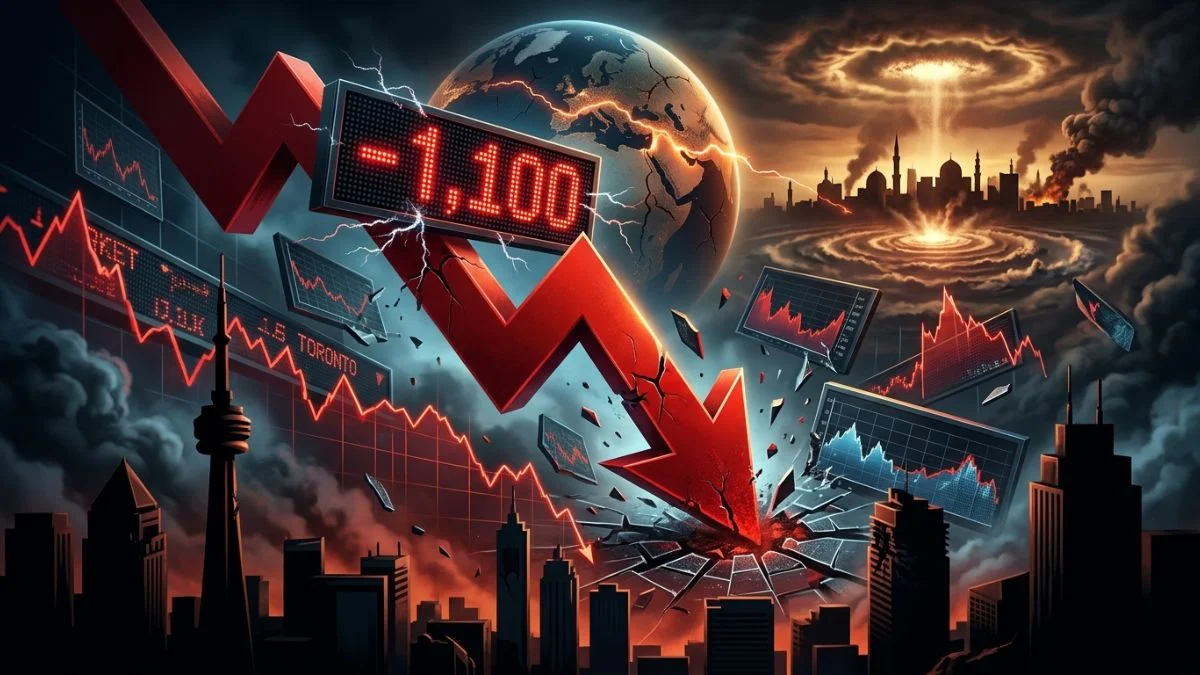
The Canadian stock market experienced a significant sell-off on Tuesday as the S&P/TSX Composite Index plummeted more than 1,100 points. This sharp decline, representing one of the most volatile trading sessions in recent years, comes as geopolitical tensions in the Middle East reach a critical flashpoint, sparking widespread investor concern over global energy stability and economic security.
Geopolitical Conflict Triggers Market Volatility
The primary driver behind the market rout is the escalating conflict involving the United States, Israel, and Iran. Following a series of retaliatory attacks, including a reported drone strike on the U.S. Embassy in Saudi Arabia, investors have rapidly shifted away from riskier assets. The uncertainty surrounding the potential for a wider regional war has led to a “risk-off” environment, where capital is being pulled from equities in favor of more stable holdings.
Market analysts note that the scale of the drop—briefly exceeding 1,180 points during intraday trading—reflects deep-seated fears that the conflict could lead to a prolonged disruption of shipping routes, particularly through the vital Strait of Hormuz.
Energy Prices Surge While Financials Struggle
Despite Canada’s position as a major energy exporter, the broader market was unable to withstand the pressure of rising yields and inflationary fears. Crude oil prices saw a substantial jump, with the April crude oil contract rising by over US$6 to settle near US$77 per barrel. While this typically provides a buffer for the TSX, the positive impact on energy giants like Suncor and Enbridge was overshadowed by losses in other sectors.
The financial sector, a cornerstone of the Canadian economy, bore the brunt of the sell-off. Major institutions, including Royal Bank of Canada and TD Bank, saw their shares decline as investors anticipated higher credit costs and potential economic cooling. The mining sector also faced heavy pressure; interestingly, gold prices retreated as some investors liquidated positions to cover losses elsewhere in their portfolios, despite gold’s traditional status as a safe-haven asset.
Impact on Canadian Investors and the Loonie
The Canadian dollar also felt the ripples of the global instability, trading lower against the U.S. dollar at approximately 72.94 cents US. For Canadian retail investors, the sudden drop serves as a reminder of how interconnected domestic markets are with international events. The current volatility is being closely monitored by the Bank of Canada, as the spike in energy prices could complicate efforts to manage inflation in the coming months.
Sector Performance Summary
- Financials: Significant losses led by the “Big Five” banks amid rising risk premiums.
- Technology: Shopify and other growth-oriented stocks fell as bond yields fluctuated.
- Energy: The only major sector showing resilience, though gains were limited by broader market panic.
- Materials: Mining stocks declined sharply following a drop in bullion prices and industrial metal demand.
As the situation in the Middle East evolves, market participants are bracing for continued volatility. Experts suggest that the duration and depth of this market correction will depend heavily on the next steps taken by international diplomatic and military leaders.
Frequently Asked Questions
Why did the TSX drop so significantly today?
The TSX dropped over 1,100 points primarily due to escalating military tensions in the Middle East, which sparked fears of a global energy crisis and increased economic instability.
How did oil prices react to the Middle East tensions?
Crude oil prices surged by more than US$6 per barrel as investors worried about potential supply disruptions through the Strait of Hormuz and other key energy hubs.
What does this market volatility mean for the Canadian dollar?
The Canadian dollar traded lower, falling to roughly 73 cents US, as investors moved toward the U.S. dollar as a preferred safe-haven currency during the crisis.