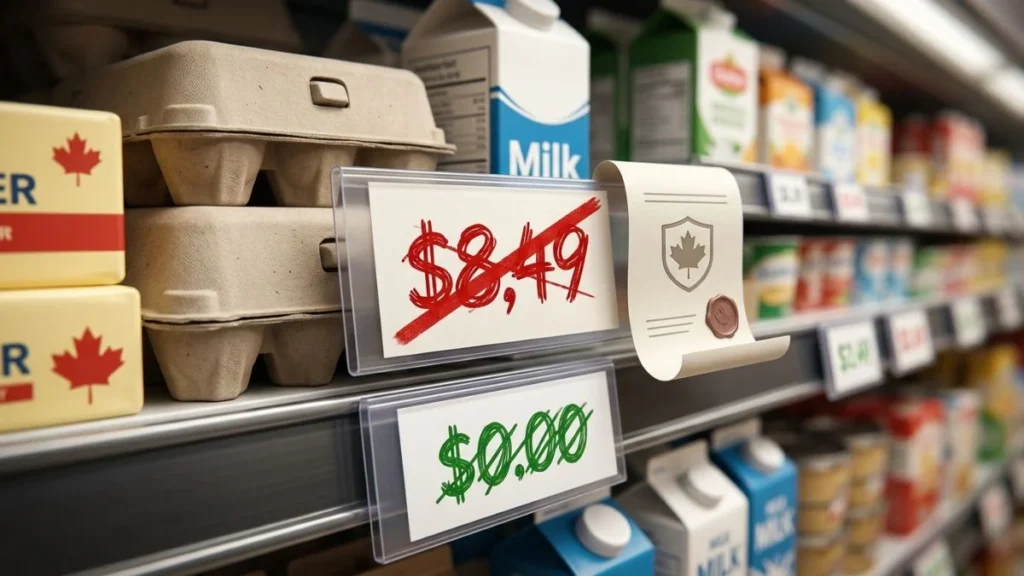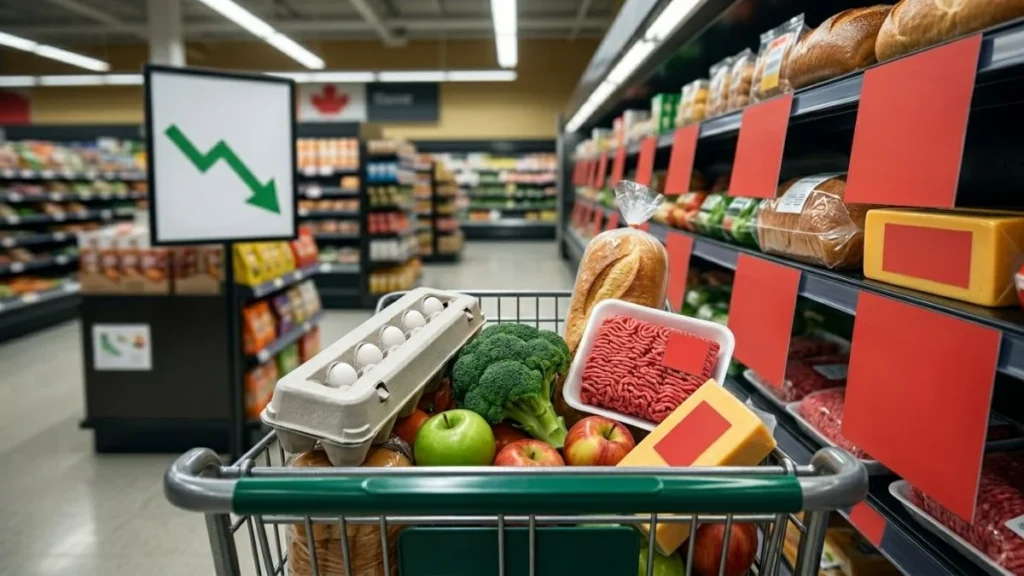

The Government of Canada has officially passed legislation to implement the Canada Groceries and Essentials Benefit, a new financial support measure designed to help millions of households manage the rising cost of living. Following the passage of Bill C-19, the legislation received Royal Assent on February 12, 2026, marking a significant shift in how the federal government delivers inflation relief to low- and modest-income Canadians.
This initiative rebrands and significantly enhances the existing Goods and Services Tax (GST) credit. By increasing payment amounts and providing a one-time lump-sum top-up, the government aims to offset the impact of food inflation which has outpaced general price increases over the last several years.
Understanding the Canada Groceries and Essentials Benefit
The new benefit is structured to provide both immediate assistance and sustained support over the next five years. According to official announcements, the program will reach approximately 12 million Canadians, including seniors, families, and single individuals who currently qualify for the GST credit.
The One-Time Top-Up Payment
To address urgent affordability pressures, the government is issuing a one-time “top-up” payment. This amount is equal to 50% of the annual 2025–26 value of the GST credit.
- Timeline: Payments are expected to be issued as early as possible this spring, with a final deadline of June 2026.
- Funding: This initial phase delivers approximately $3.1 billion in direct assistance.
- Mechanism: The payment will be issued as a lump sum to those who were eligible for the GST credit in January 2026.
Long-Term Annual Increases
Beyond the immediate top-up, the Canada Groceries and Essentials Benefit includes a permanent enhancement to the credit system for the next five years. Starting in July 2026, the base value of the benefit will increase by 25%. This long-term adjustment is projected to provide $8.6 billion in additional support through 2031.
Breakdown of Expected Payment Amounts
The total financial impact for a household depends on family size and net income. For the 2026–27 benefit year, which combines the one-time top-up and the 25% increase, the maximum total amounts are as follows:
- Couples with Two Children: Can receive a total increase of $805, bringing their total annual benefit to approximately $1,890.
- Single Individuals: Can receive a total increase of $402, bringing their total annual benefit to approximately $950.
- Single Seniors: A senior with a net income of $25,000 would see a one-time top-up of $267 and a longer-term annual increase of $136.
Eligibility and Application Process
One of the most important aspects of this new benefit is that it is delivered automatically. Eligible Canadians do not need to fill out a separate application to receive the funds.
- Tax Filing Requirements: Eligibility is based on income tax returns. To receive the one-time top-up this spring, residents must have filed their 2024 tax return. To receive the enriched quarterly payments starting in July 2026, the 2025 tax return must be filed.
- Income Thresholds: The benefit remains income-tested, targeting those with low and modest incomes. The 25% increase also slightly expands the income threshold, allowing an estimated 500,000 additional individuals and families to qualify who may have been just above the previous cut-off.
- Payment Method: Payments will continue to be issued quarterly in July, October, January, and April via direct deposit or mail, following the established CRA schedule.
Broader Efforts for Food Security
The Canada Groceries and Essentials Benefit is part of a larger federal strategy to stabilize food costs and support domestic production. Other measures included in the 2026 affordability plan involve:
- National School Food Program: Making the program permanent to provide nutritious meals for up to 400,000 children annually.
- Food Security Funding: Allocating $20 million to the Local Food Infrastructure Fund to assist food banks and $150 million for a Food Security Fund to support small and medium-sized enterprises.
- Tax Incentives for Producers: Introducing immediate expensing for greenhouse buildings to lower the costs of domestic food production and increase supply.
- Market Monitoring: Strengthening the Competition Bureau’s ability to monitor food supply chains and enforce fair pricing practices to combat “shrinkflation” and price manipulation.
With the passage of Bill C-19, the government intends to provide a “predictable and meaningful” boost to household budgets while long-term economic measures take effect.