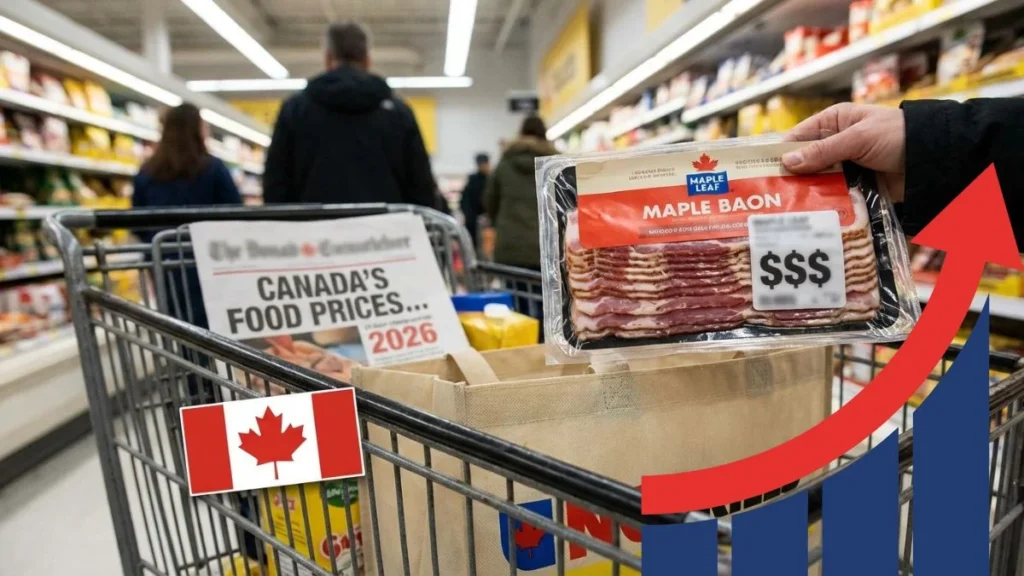
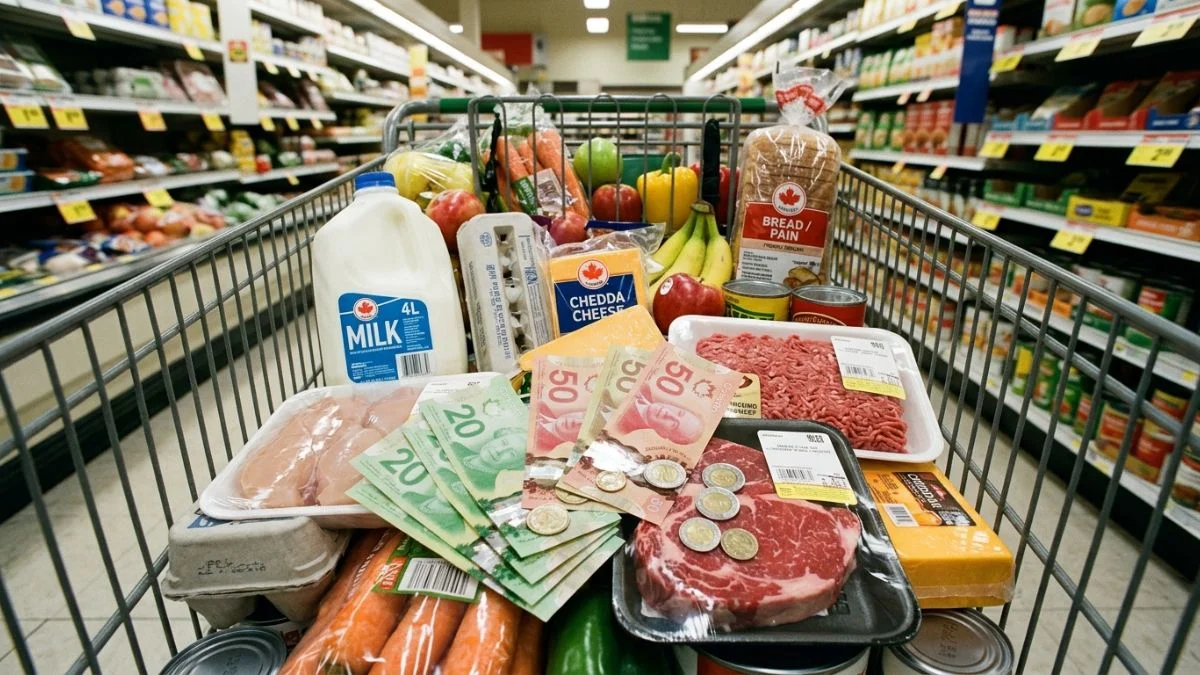
The latest annual economic forecast reveals that Canadian households should prepare for a significant increase in grocery expenses throughout 2026. According to the 16th edition of Canada’s Food Price Report 2026, overall food prices are projected to rise between 4% and 6% over the coming year. This surge is expected to outpace the general inflation rate, which the Bank of Canada aims to maintain near the 2% target.
Financial Impact on Canadian Families
The report, a collaborative effort led by Dalhousie University and several other prominent Canadian institutions, indicates that the average family of four will likely spend up to $17,571.79 on food in 2026. This represents an annual increase of approximately $994.63 compared to 2025. Data shows that food costs in Canada have escalated by 27% over the last five years, placing sustained pressure on household budgets.
Projected Price Increases by Category
Different food sectors will experience varying levels of inflation. The 2026 forecast breaks down the expected increases as follows:
- Meat: 5% to 7% (primarily driven by record-low cattle numbers)
- Restaurants: 4% to 6%
- Vegetables: 3% to 5%
- Bakery: 2% to 4%
- Dairy and Eggs: 2% to 4%
- Fruit: 1% to 3%
- Seafood: 1% to 2%
Primary Drivers of Food Inflation in 2026
Several complex factors are contributing to the upward trend in food costs. Experts from the Agri-Food Analytics Lab identify climate change as a major catalyst, specifically noting that prolonged droughts in major beef-producing regions have reduced supply and increased feed costs.
Geopolitical factors and trade relations also play a role. While some trade-related pressures from 2025 have begun to stabilize, the long-term costs of diversifying supply chains and managing international tariffs continue to influence retail pricing. Additionally, reforms to the Temporary Foreign Worker Program (TFWP) are expected to create labor shortages in the agricultural sector, potentially raising production costs.
Regional Variations and Policy Changes
The impact of these price hikes will not be uniform across the country. Provinces including Alberta, Ontario, Quebec, Nova Scotia, and New Brunswick are forecasted to see price increases above the national average. Conversely, British Columbia and Manitoba may experience growth slightly below the 4-6% range.
New Regulations for 2026
Starting in January 2026, two major policy shifts will take effect in the Canadian food industry:
- Grocery Code of Conduct: This industry-led initiative becomes fully operational, aiming to create a fairer environment between retailers and suppliers to improve long-term price stability.
- Front-of-Pack Labeling: Statistics Canada and Health Canada have mandated new nutrition labels for products high in sodium, sugar, or saturated fat, which may lead to product reformulations and potential price adjustments for certain processed goods.
Despite the forecasted increases, the report notes that lower interest rates in 2026 could provide some relief to food businesses by making loans for expansion and modernization more affordable.
FAQs
How much will grocery bills increase for a typical family in 2026? The average family of four is expected to pay nearly $1,000 more for food in 2026, bringing the total annual expenditure to approximately $17,571.
Which food items will see the highest price hikes? Meat products, particularly beef and chicken, are projected to lead the increase with a forecasted spike of 5% to 7%.
Will the Grocery Code of Conduct lower prices immediately? While the code launches in January 2026 to improve market fairness, experts suggest it will take time for these structural changes to result in noticeable price stability for consumers.