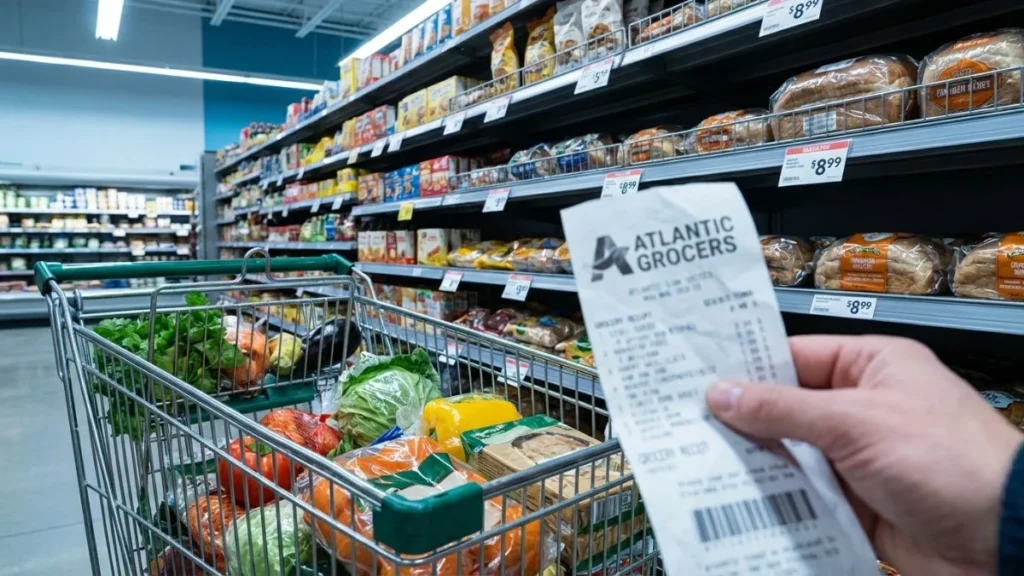
Atlantic Canadians are experiencing a significant rise in food costs as regional inflation outpaces the national average. According to the 2026 Canada’s Food Price Report, families in Nova Scotia, New Brunswick, and Prince Edward Island are expected to see grocery bills increase by up to 6% this year, placing a heavy burden on household budgets in the Maritimes.
Regional Food Inflation Surpasses National Average
While Canada’s national food inflation rate has shown signs of stabilization, the Atlantic provinces remain an outlier with higher-than-average price growth. Data from Statistics Canada for January 2026 reveals that while the national All-items Consumer Price Index (CPI) rose by 2.3%, food prices in specific Atlantic regions saw much steeper climbs.
In Prince Edward Island, food prices (including both stores and restaurants) surged by 10.1% year-over-year. Similarly, Newfoundland and Labrador reported a 9.2% increase in food costs compared to the previous year. This spike is partly attributed to the “base-year effect” following the conclusion of the temporary federal GST/HST holiday that was implemented between December 2024 and February 2025.
Forecasted Costs for 2026
The 16th edition of the annual Canada’s Food Price Report, a collaborative study by Dalhousie University and other leading institutions, predicts a challenging year for Canadian consumers.
- Average Annual Expenditure: A typical family of four is projected to spend up to $17,571.79 on food in 2026.
- Total Increase: This represents an additional $994.63 in annual costs compared to 2025.
- Provincial Outlook: Nova Scotia, New Brunswick, and Prince Edward Island are all forecasted to experience price increases above the national average throughout the remainder of the year.
Factors Driving Atlantic Price Hikes
The unique economic and geographic landscape of Atlantic Canada contributes to these heightened costs. Experts point to several key drivers:
- Logistics and Transportation: Most food products are trucked into the region from distant manufacturing hubs. Rising fuel costs and supply chain complexities disproportionately affect Atlantic provinces due to their remote locations.
- Climate Constraints: Shorter growing seasons in the Maritimes limit local food availability, forcing a higher reliance on expensive imports.
- Trade and Tariffs: Ongoing trade disputes and volatility in the Canadian dollar have made imported items—particularly processed foods and fresh produce—more expensive.
- Supply Shortages: Significant price jumps have been recorded in specific categories, such as fresh beef (+21.1%) and coffee/tea (+25.2%) in Newfoundland and Labrador, driven by global supply constraints and drought conditions in cattle-producing regions.
Shifting Consumer Behavior and Policy Changes
To combat rising prices, Atlantic Canadians are increasingly participating in the “Buy Canadian” movement and seeking out discount retailers. At the policy level, the Government of Canada has implemented the Grocery Code of Conduct, which became fully operational in January 2026. The code aims to ensure fair negotiations between suppliers and retailers, potentially leading to more stable pricing in the long term.
Additionally, as of January 1, 2026, new Health Canada regulations require front-of-pack nutrition labelling for foods high in sodium, sugar, and saturated fat. While designed to improve public health, these changes have prompted product reformulations and packaging updates across the food industry.
Frequently Asked Questions
How much more will the average Canadian family spend on food in 2026?
The average family of four is expected to spend approximately $994.63 more on groceries this year, bringing the total annual cost to $17,571.79.
Which food categories are seeing the highest price increases?
Meat products are projected to see the largest jump, with price increases forecasted between 5% and 7% due to tightened cattle supplies and high feed costs.
Why is food inflation higher in Atlantic Canada than in other provinces?
Higher costs are primarily driven by increased transportation expenses, a shorter local growing season, and the end of temporary tax relief measures from the previous year.